Signage and wall finishes
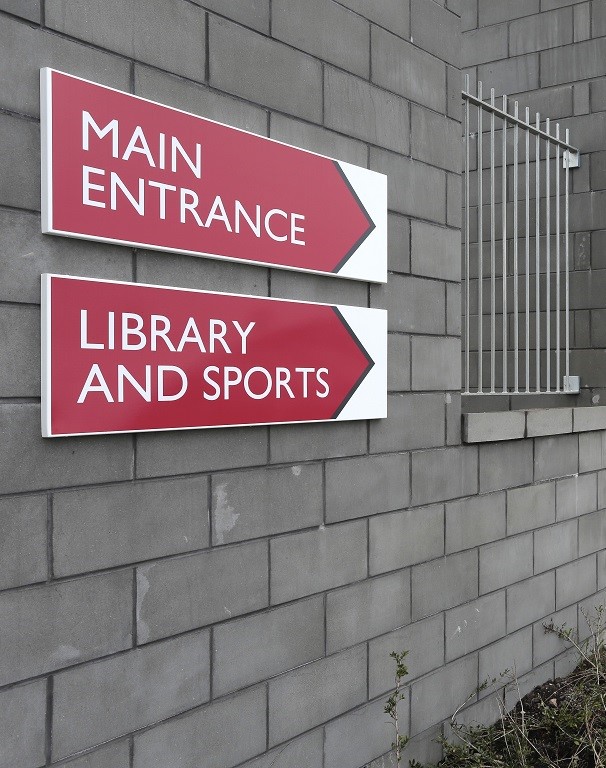
Wall finishes can completely change how signage needs to be manufactured and installed, even when the sign itself looks straightforward on a drawing.
Timber slats, tiles, stone, acoustic panels and decorative finishes all create different challenges. The signage design itself may work perfectly, but if the wall construction and finished surface haven’t been considered, problems can appear when the project reaches manufacture or installation.
Understanding the surface early gives us more options and helps avoid compromises later.
Wall Finishes: Timber Slats and Feature Panelling
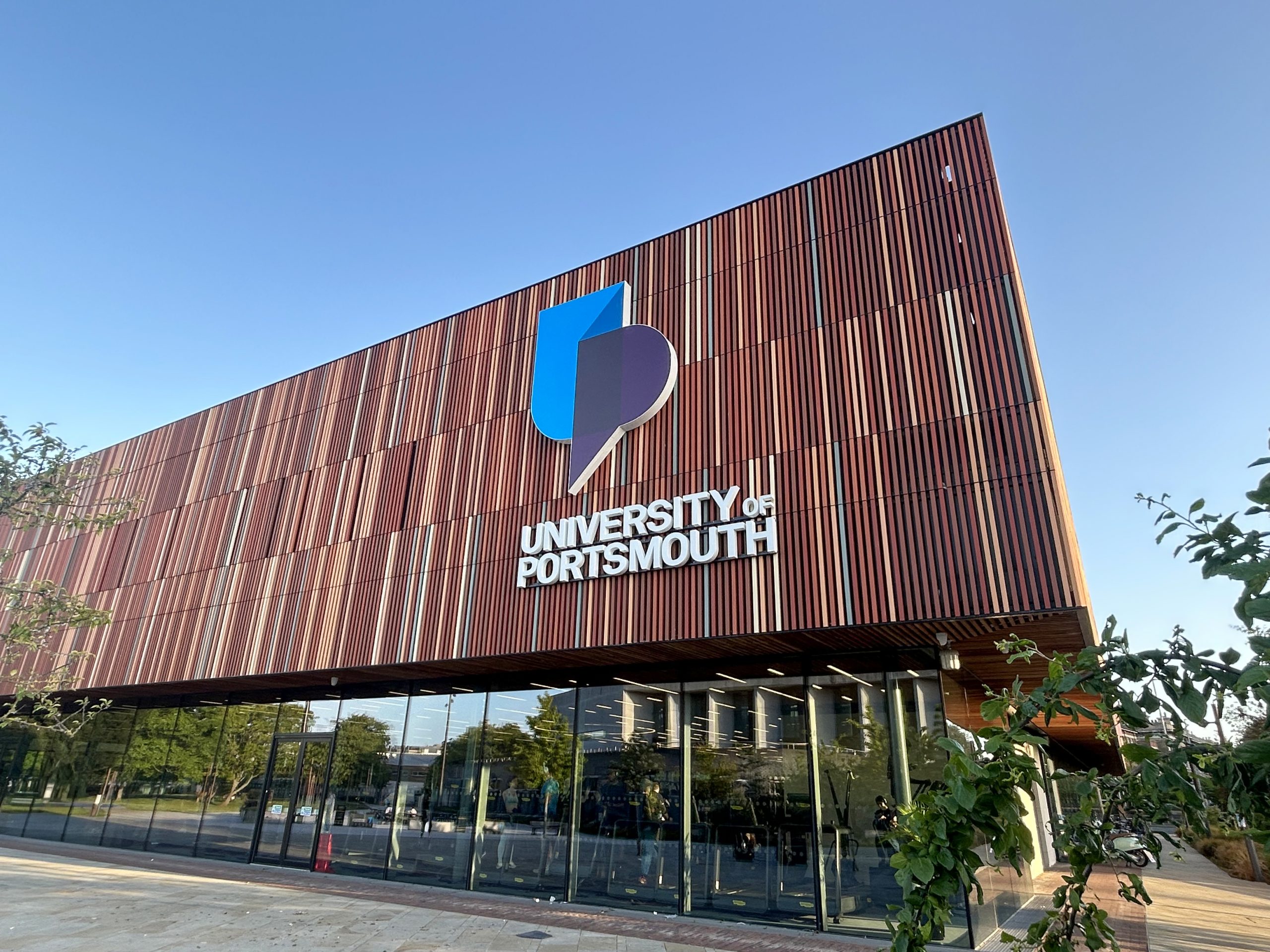
Timber slats and decorative wall panelling are now common across reception areas, offices, hotels and residential developments. They can also make fixing signage more complicated.
Individual letters or symbols may need to span several slats, while the gaps between them leave fewer suitable fixing points. The depth and profile of the panelling also affect how the signage sits against the wall.
Where possible, we need to understand what sits behind the decorative finish. A suitable backing or fixing position can make a significant difference, particularly for larger signs or individual built-up letters.
Illuminated signage needs further coordination. Cables and power supplies need somewhere to go, and planning these before the wall is finished usually gives a much cleaner result.
Glass, Tiles and Stone
Glass requires a different approach because drilling or fixing directly through it may not be possible, particularly where toughened glass has already been manufactured.
The fixing method therefore needs to form part of the design. Depending on the sign, options can include specialist adhesives, stand-off fixings incorporated into the glass design or fixing the signage to an adjacent surface instead.
Tiles and stone bring their own considerations. Drilling finished surfaces can carry a risk of cracking or damage, and fixing positions may need to work around joints, edges and the construction behind the finish.
The weight of the signage also matters. A fixing suitable for a small flat-cut letter won’t necessarily work for a large directory, projecting sign or built-up illuminated logo.
Knowing the wall build-up allows us to select a fixing method that works with the chosen wall finish rather than relying on the surface itself to support the sign.
Acoustic Panels and Decorative Wall Finishes
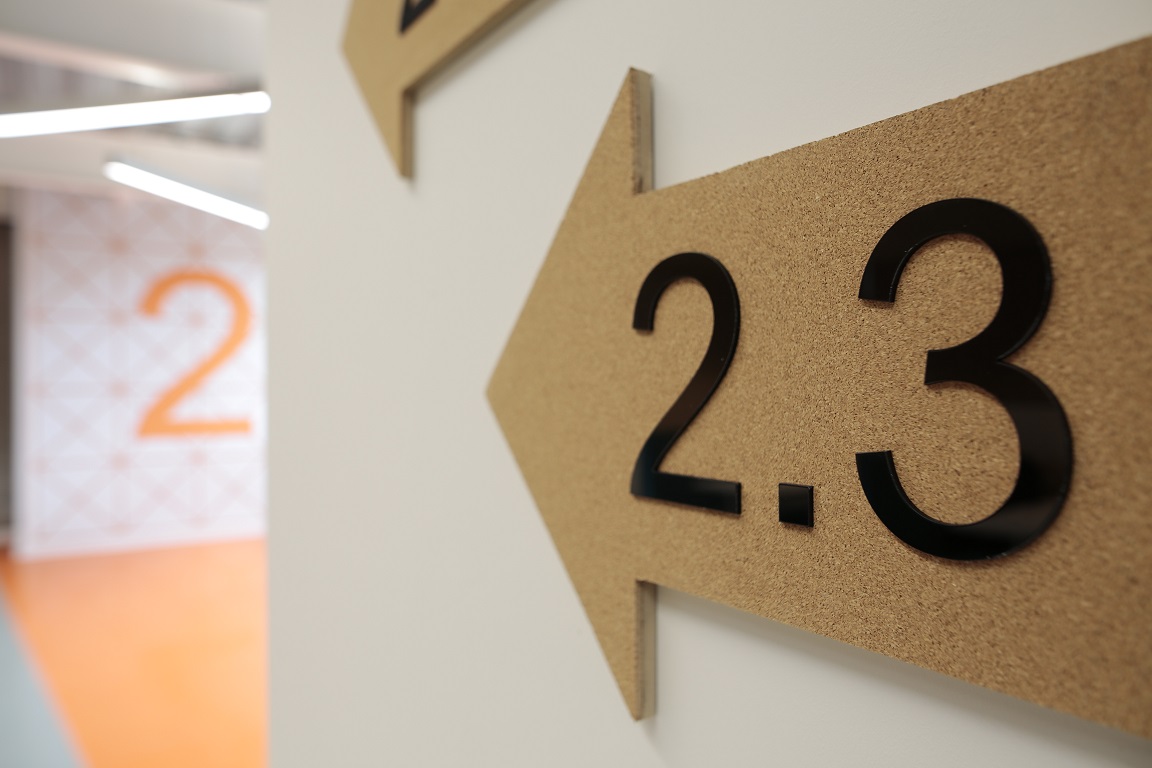
Designers create acoustic wall panels for appearance and sound absorption, not necessarily for supporting signage.
Fixing directly into the panel may not provide enough support, so signage often needs to fix back through the panel into the wall or supporting structure behind it. That becomes much easier when we consider fixing positions before we install the panels.
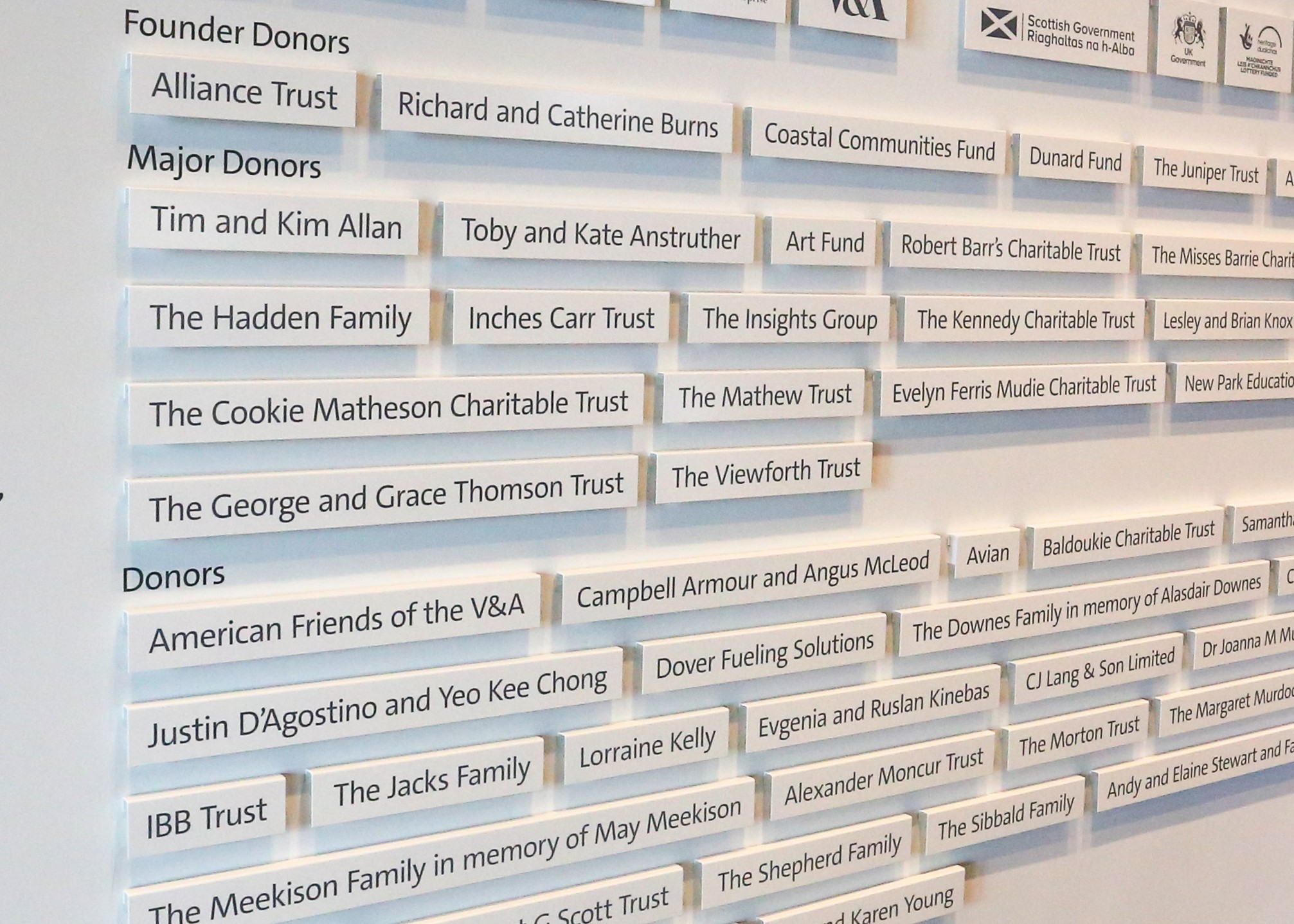
Decorative plaster, specialist coatings and textured wall finishes can also affect the final result. Adhesive fixing may be unsuitable, while mechanical fixings can leave visible damage if someone ever needs to move or replace a sign.
Even the surface texture can make a difference. A sign that sits neatly against a smooth painted wall may need stand-offs or a different fixing arrangement on an uneven or heavily textured finish.
Coordinating Signage with the Wall Finish
At design stage, a few pieces of information can prevent problems later: the wall construction, final finish, approximate signage size and weight, fixing restrictions and, for illuminated signage, the location of power and cable routes.
It is also worth considering joints, slat positions, grout lines and other details when setting out signage. Designers find it much easier to move a sign slightly at the design stage than to try to make an unsuitable fixing position work once they have installed everything.
When planners incorporate suitable support or patressing into the wall construction for heavier or projecting signage, they can also provide the installer with a secure fixing point without affecting the finished appearance.
Getting these details right doesn’t necessarily mean adding complexity to the design. In many cases, it does the opposite.
By considering wall finishes alongside the signage design, we can choose the right fixing method, coordinate any power requirements and manufacture the signage to suit the finished surface. The result is a cleaner installation with fewer compromises when the project reaches site.
Working on a project where signage needs to coordinate with specialist wall finishes? Speak to Norsign early and we can help with fixing methods, construction details and practical signage solutions before they become an issue on site. Contact us by email hello@norsign.co.uk or by calling 01698 713399

