Designing Signage That Performs in Passivhaus Schools
Passivhaus schools are designed around one core principle, energy performance, to create low-carbon buildings. Every element of the building is carefully considered to reduce energy demand, improve comfort, and deliver long term value. Designers often treat signage as a late stage add on, assessing it primarily on appearance rather than impact.
In reality, signage can either support or undermine Passivhaus principles. When approached correctly, it becomes part of the building strategy rather than contradicting it.
Understanding what Passivhaus demands from signage
By the time signage is procured, most architectural decisions are already locked in. But some elements, wall finishes, lighting
The design prioritises airtightness, thermal performance, indoor air quality, and durability in Passivhaus design. Any product that the builders introduce into the building must respect these fundamental elements.
For signage, this means avoiding unnecessary penetrations, reducing reliance on powered elements, and specifying materials and fixing methods that will not compromise the building envelope. Sustainable signage in a Passivhaus school is not just about recycled content. It is about how the sign performs over its full lifecycle.
Reducing operational carbon through smarter sign design
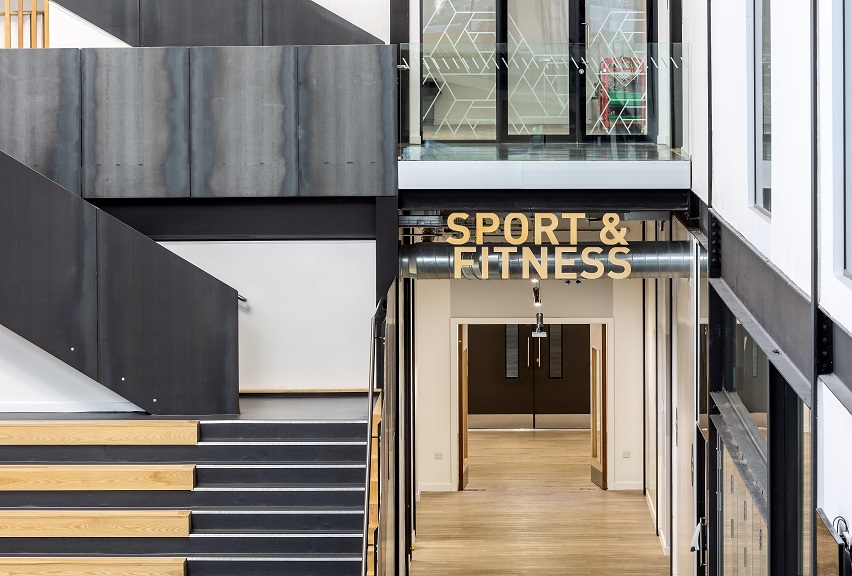
One of the most effective ways signage can support a low energy building is by reducing the need for powered solutions. Clear legibility through considered typography, appropriate sizing, and strong colour contrast often removes the requirement for internal illumination altogether.
Strategic placement also plays a key role. Well planned wayfinding reduces the overall number of signs required, while still improving clarity for pupils, staff, and visitors. Fewer signs means less material, less installation, and lower long-term maintenance.
Finishes should be selected with daylight conditions in mind. Matte and low glare surfaces improve readability in naturally lit environments, supporting the Passivhaus approach to lighting without adding visual noise.
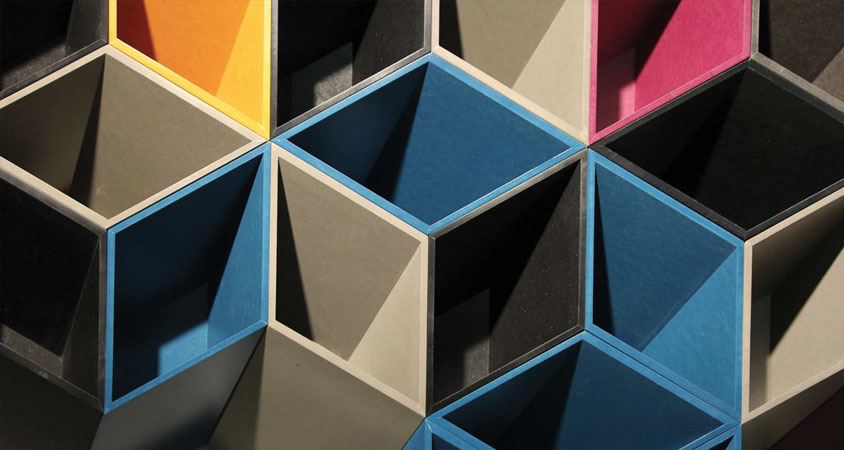

consistency in archirectural signage is essentail
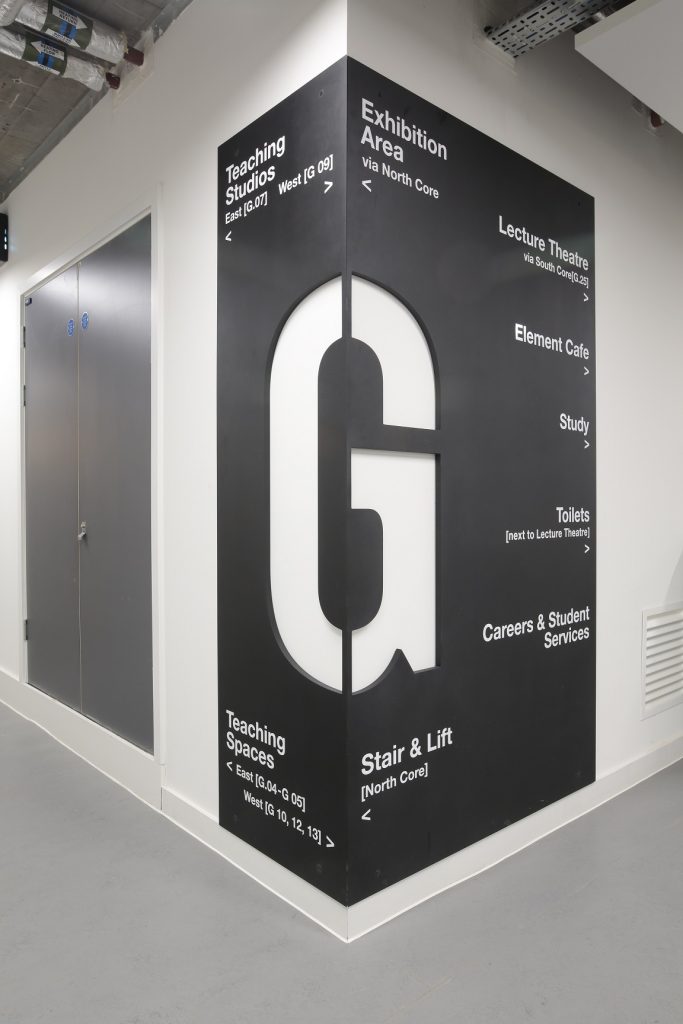
Large developments often include dozens of sign types, multiple materials, and varied user requirements. The entire scheme should read as a coherent family, not a collection of mismatched components delivered by different teams.
Consistency needs to cover:
Typography and hierarchy
Materiality, finishes, and illumination style
Iconography and accessibility features
Fixings, stand offs, rails, and mounting methods
Signage contractors who maintain strong internal quality checks and detailed type catalogues help protect the visual language of the project.
Materials that align with Passivhaus principles
Sustainable signage materials should be assessed based on longevity, indoor air quality, and end of life considerations.
Long life substrates reduce replacement cycles, which in turn lowers embodied carbon over time. Low VOC finishes help protect indoor air quality, particularly important in educational environments. Timber based and fibre boards can be appropriate when responsibly sourced and correctly specified for the environment.
Equally important is knowing what to avoid. Highly composite materials that are difficult to repair or recycle often undermine sustainability claims, even if they appear durable.
Physical samples play an important role here. They allow design teams to assess not only appearance, but weight, finish quality, and suitability for long term use.
Fixings, fabric, and thermal integrity
One of the most overlooked aspects of sustainable signage is fixing methods. In Passivhaus schools, builders find it unacceptable to fix directly to cladding due to the risk of compromising airtightness or introducing thermal bridging.
Early coordination allows designers to fix signage back to the structure or integrate it with internal walls and joinery without impacting the building envelope. When designers consider signage at the design stage, they find it far easier to maintain performance while achieving the desired visual outcome.
This level of coordination also avoids retrofitted solutions that can add cost, delay, and risk on site.
Designing for pupils, staff, and inclusivity
Sustainability is not only environmental. In schools, it is also social.
Colour contrast and colour-blind testing ensure information is accessible to all users. Correct viewing distances and hierarchy are particularly important in primary and secondary settings, where users vary significantly in height and comprehension. A calm, well-structured signage scheme contributes to a positive learning environment.
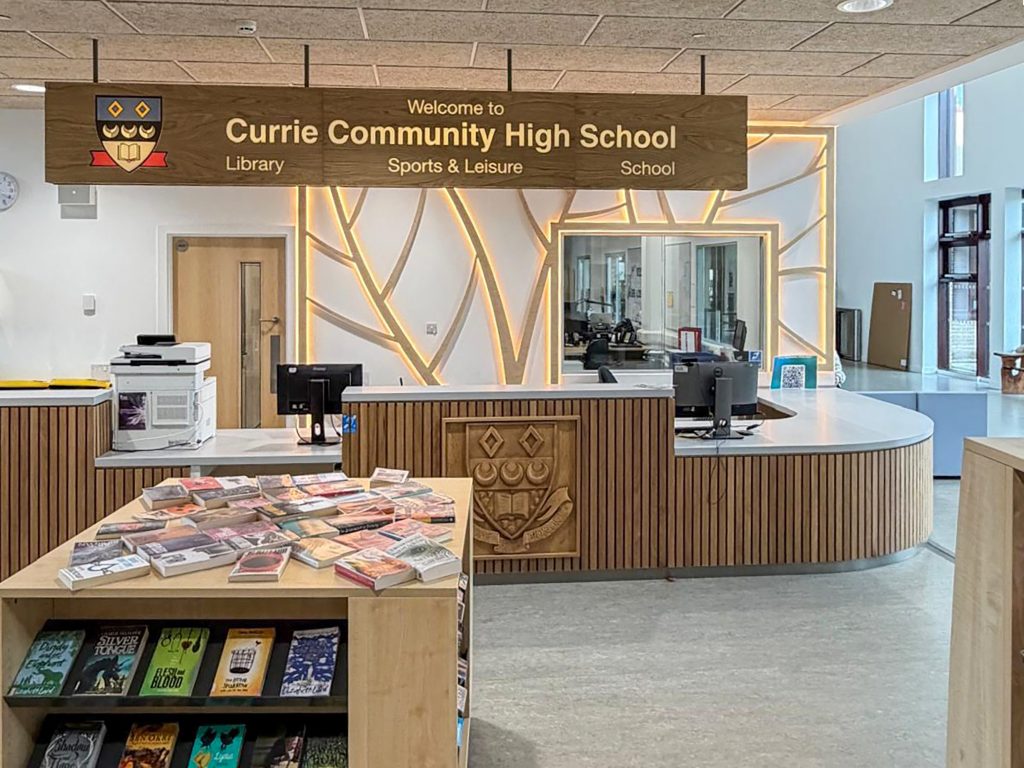
We manufactured and installed the signage at Currie Community High School, which was built to Passivhaus standards. You can read more on this project here https://www.norsign.co.uk/our-work/currie-community-high-school/
Rethinking what sustainable signage really means
The most sustainable signage solution rarely involves complexity. Designers often create fewer signs, better designed, install them correctly, and build them to last the lifetime of the building. In Passivhaus schools, signage should perform like the building does.
Designers create efficient, durable, low impact signage, carefully considering it from the outset. When they integrate signage early and design it with performance in mind, it becomes part of the architecture rather than an afterthought.
contact our team
If you are working on a Passivhaus school project and want signage that supports performance rather than compromises it, engage with signage early. Thoughtful design, material selection, and fixing strategies create a measurable difference.
Speak to our team on 01698 713399 or by email sales@norsign.co.uk to better understand how we can help signage integrate seamlessly with Passivhaus principles and deliver clarity that lasts for the lifetime of the building.

