why fixings matter
When construction project teams discuss signage, they often focus on how it will look and not consider the fixings. Early conversations tend to be dominated by finishes, colours, typography, and illumination. While these elements are important, they rarely determine whether signage performs well over time.
Fixings are one of the least visible decisions in signage design, yet they have the greatest impact on longevity, maintenance, safety and future flexibility. When considered too late, fixing methods can introduce risk, compromise design intent and create unnecessary cost.
fixings and longevity
A premium finish cannot compensate for a poorly considered fixing strategy.
Inadequately fixed signage can experience movement, water ingress, staining, premature wear, or outright failure, particularly in external environments.
Correct fixing methods consider weight, wind loading, thermal movement, and the behaviour of the host substrate.
They keep signage secure, legible, and visually consistent over time, rather than allowing it to become a maintenance issue shortly after handover.
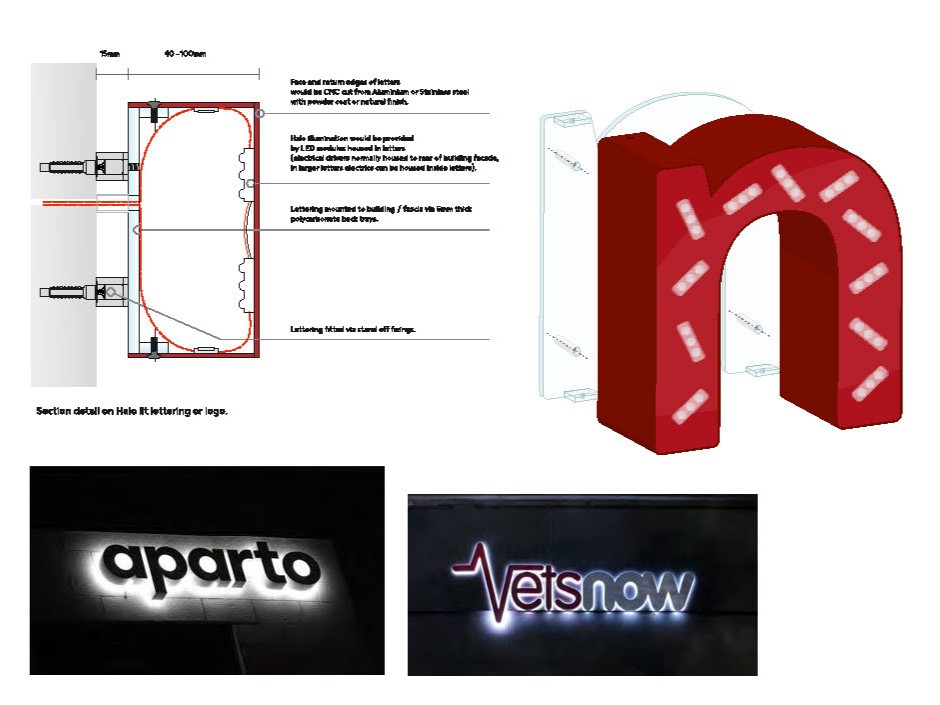
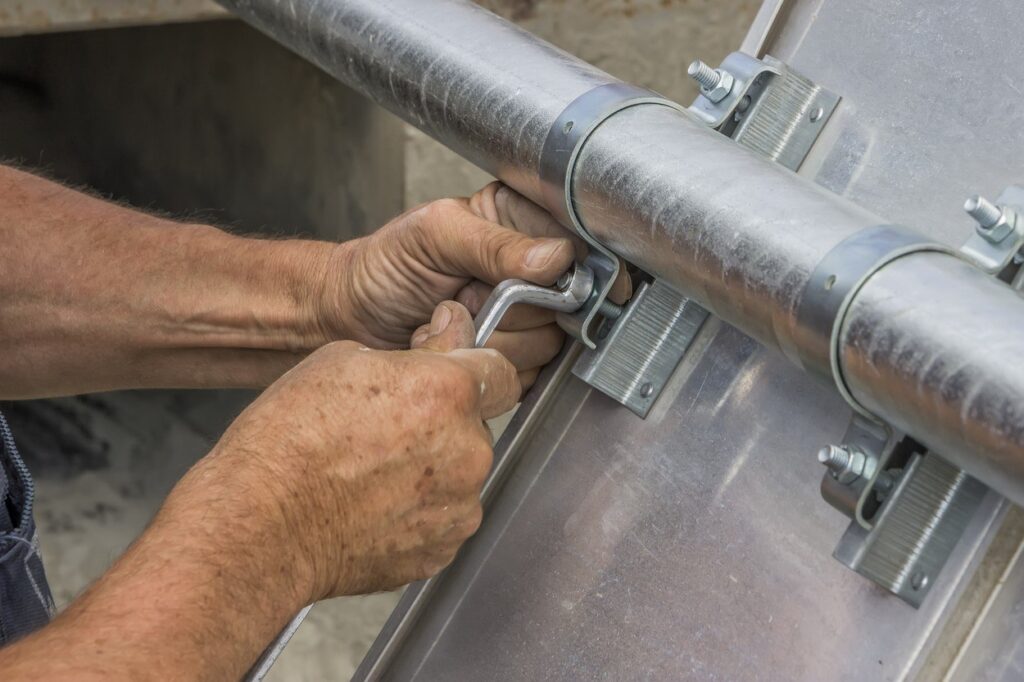
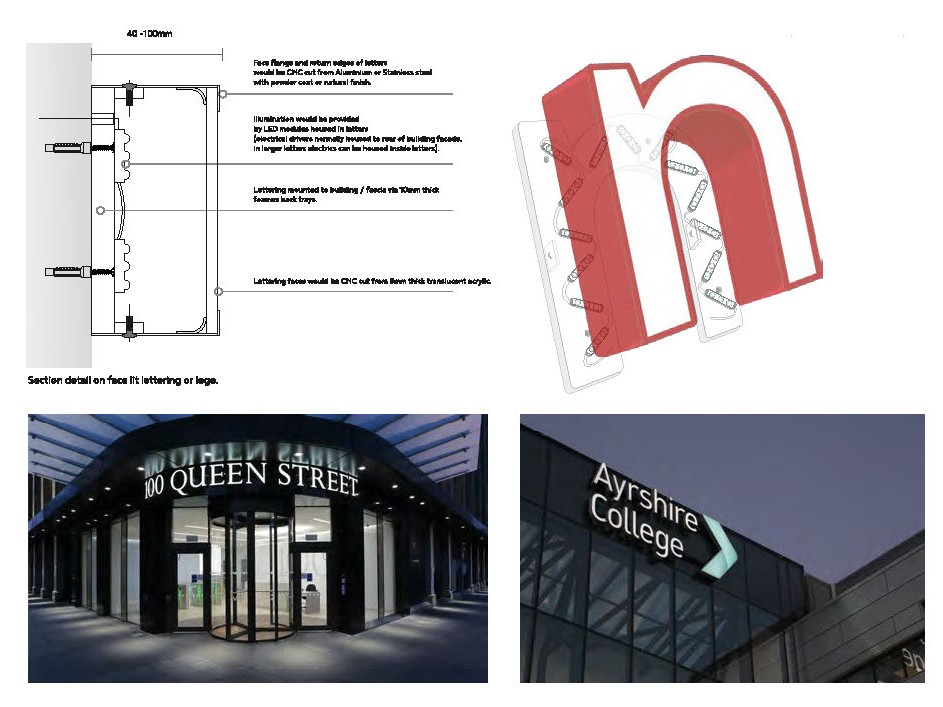
fixings and the building fabric
One of the most common problems we encounter is installers fixing signage directly to cladding or façade systems without sufficient consideration of warranties or long-term performance.
Designers rarely create cladding systems to carry additional loads without structural backing. Poorly planned fixings can compromise weatherproofing, create cold bridges, or invalidate manufacturer warranties.
When teams develop fixing strategies early, they can coordinate signage with structural elements, secondary steelwork, or dedicated backing plates, avoiding penetrations that introduce risk later.
fixings and maintenance
Signage does not exist in isolation. Illumination requires drivers, transformers, and access for future replacement. Cleaners and inspectors maintain external signs. Buildings may evolve, necessitating updates to internal signs.
Fixing methods that do not allow safe access or removal often lead to treating signage as disposable. Early consideration enables concealed fixings, removable panels, and safe maintenance access without damaging surrounding finishes.
fixings do not limit design
Many people misunderstand that technical fixing requirements restrict creative freedom. In reality, the opposite is true.
When designers consider fixing methods at the concept stage, they have more freedom to explore scale, projection, material weight, and integration. Late-stage fixes often force designers to compromise, such as reducing sizes, using visible brackets, or simplifying detailing to suit site constraints.
Early coordination allows designers to develop design intent and technical performance together.
correct fixing manages risk
From a project perspective, the team should not resolve fixing methods on site. The team conducts a risk management exercise.
The team influences programme certainty, cost control, health and safety during installation, and long-term asset performance. Projects that integrate signage fixings early typically experience fewer variations, fewer site issues, and a smoother installation process.
getting it right
Successful signage does not solely depend on how it looks on completion day, but on how it performs throughout the life of the building.
By prioritising fixing methods early in the design process, clients and design teams protect the building fabric, reduce long term costs and ensure signage remains safe, legible and adaptable for years to come.
At Norsign, we consider fixing strategy from the outset, working alongside architects, contractors and consultants to ensure signage is fully integrated, technically robust and built to last.
Contact our team on 01698 713399 or email sales@norsign.co.uk to discuss the best fixing methods available for your project.

